
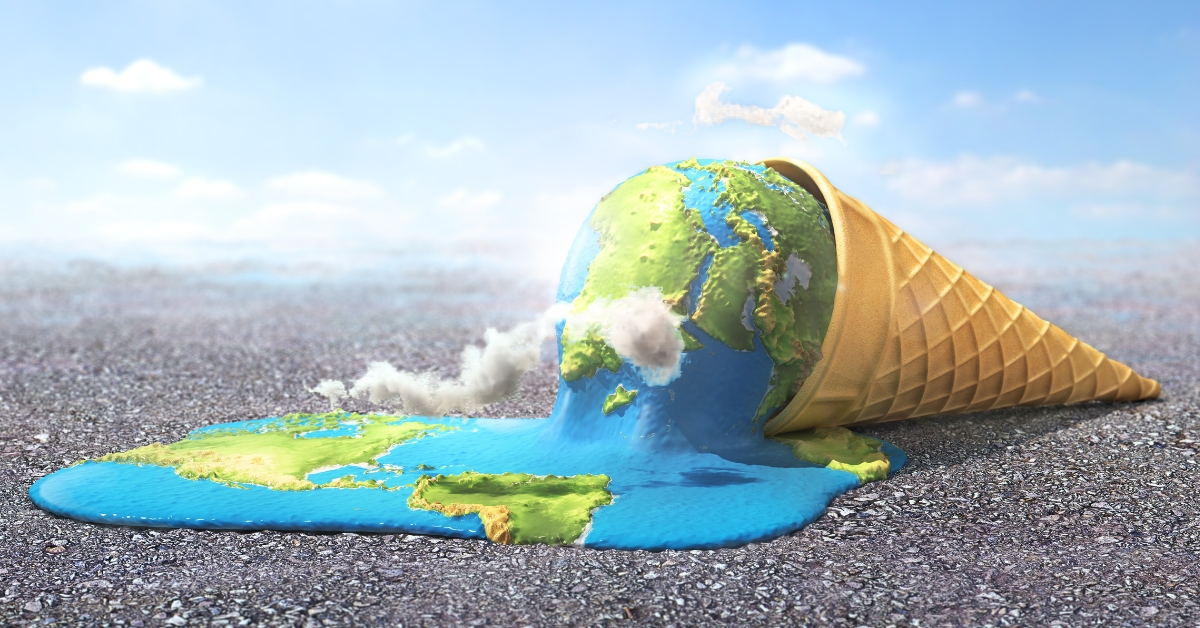
We are no longer witnessing a one-off disruption. We are in the midst of a climate shift. The latest report from the World Meteorological Organization (WMO) confirms that 2015–2025 will be the 11 warmest years on record. An unprecedented run that marks a rupture: what was once extraordinary is gradually becoming the norm.
Eleven Record Years: The Climate Shifts Into a New Phase
“The state of the global climate is in a state of emergency,” warns António Guterres, the U.N. secretary-general. “The planet is being pushed beyond its limits. Every indicator is red. When history repeats itself eleven times, it’s no longer a coincidence. It’s a signal.”
The message is clear: climate warming is no longer a trend, it is a settled trajectory. And this trajectory is already reshaping our daily lives.
Heat waves, torrential rains, stronger storms, prolonged droughts… These events are no longer isolated anomalies. They are becoming the backdrop of a more unstable world.
In this context, climate is no longer solely an environmental issue. It is economic, social, and geopolitical. “Our dependence on fossil fuels destabilizes both climate and global security,” insists António Guterres. Climate disruption has become a driver of a global crisis.
Oceans and Ice: Signals That No Longer Lie
Behind the temperature records, other indicators confirm the scale of the phenomenon.
The ocean, a true thermal regulator of the planet, absorbs a tremendous amount of heat. A crucial buffering role… but it has its limits. As it keeps absorbing energy, it warms, expands, and disrupts climatic balances.
Ice, meanwhile, is retreating steadily. Arctic sea ice remains at historically low levels. Antarctica records one of its smallest extents ever observed. Glaciers are melting at a sustained pace. What disappears today cannot be recovered on human timescales.
In other words: the physical signals of the climate confirm what the temperatures already show. The system is undergoing profound change.
Weather That Is Growing More Extreme and Unpredictable
For the first time, the WMO includes a key indicator that remains little known to the public: the Earth’s energy imbalance. The planet absorbs more energy than it radiates back into space.
This imbalance, rising steadily since the 1960s, reached a record high in 2025. A powerful signal: the climate system can no longer stabilize.
At the same time, concentrations of greenhouse gases are at levels not seen for at least 800,000 years. A rupture on the scale of Earth’s history.
Human activities are increasingly disturbing the natural balance. We will live with these consequences for centuries, even millennia.
“Human activities are increasingly disturbing the natural balance,” notes Celeste Saulo, Secretary-General of the World Meteorological Organization.
And the effects are already visible. In 2025, heat waves, wildfires, floods, and storms claimed thousands of lives and caused billions of dollars in damage. Weather is becoming more violent, but also more unpredictable.
What’s Really Changing (and Why It Matters)
The most alarming aspect may not be the intensity of the occurrences, but their frequency.
Eleven consecutive record years is not a coincidence. It’s a tipping point. A new climate normal is taking hold, one we will have to adapt to.
And this normal raises a simple, brutal question: are we adapting… or merely getting used to it?
Understanding This String of Grim Records
Why talk about 11 warmest years?
Because global climate data show that every year from 2015 through 2025 ranks among the warmest on record, creating an unprecedented run.
Does this mean the climate is out of control?
Climate remains governed by physical laws, but human activities are significantly disturbing its balance, making events more extreme and harder to predict.
Why do the oceans play a central role?
Oceans absorb a large share of excess heat. But as they warm, they drive sea level rise and disrupt climate cycles.
The last 11 years have been the hottest years ever recorded. Earth’s energy imbalance has reached its highest than at any time in observed history, with heat reaching deeper into the ocean.
This is the Global #StateOfClimate 2025.
Read : https://t.co/oeI0TnHsDH #WorldMetDay pic.twitter.com/0BOQk7xlxd— World Meteorological Organization (@WMO) March 23, 2026