
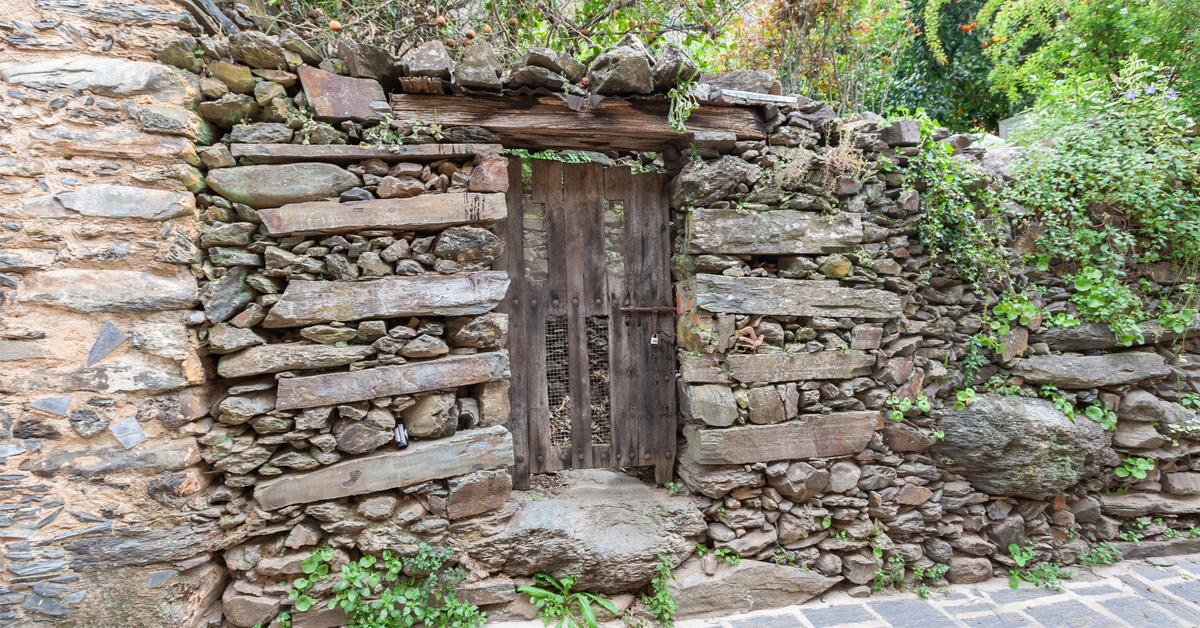
Things happen in a vegetable garden… and even more, it’s never quite the same from one year to the next! Leave spaces untouched… and by equipping them with stones and wood, you’ll add even more consistency to your garden.
For a pest-free vegetable garden, you need to understand it better
A vegetable garden is a patch of land that humans use to grow edible things or simply beautiful things. A potager is what we call an agrosystem, an agricultural ecosystem.
Although there are many techniques to cultivate soil in an environmentally friendly way and to preserve biodiversity, such as mulching, simply giving nature a space of its own isn’t useless either. It’s enough to dedicate a portion of your space to nature and to stop driving it away.
Trying to master the animals that live there, or even those that just pass through, is often as futile as trying to empty the sea with a pail. By contrast, encouraging a thriving and diverse biodiversity of helpers gives your agrosystem every chance to find its own balance.
Wood in the Garden?
If there is one thing you’ll find almost everywhere in nature, it is wood!
Wood can take many forms, from green branches to decayed logs, through larger sections of pruned fruit trees. The beauty of this raw material is that it is found everywhere and, most of the time, right there, in or near your garden.
What could be easier than using it rather than wasting time and energy, in every sense of the term, to haul it to the dump?
And indeed, the wood and all the species you can find should have your full attention:
- A pile of suitably sized branches can provide a shelter for hedgehogs
- Similarly, a large enough stack of logs can offer refuge to lacewings for their overwintering
- A pile of old, somewhat decayed stumps will encourage ground beetles, the slug-eaters and other troublesome insects
- A stack of branches of all sizes will provide shelter for many decomposers of organic matter, such as pillbugs (roly-polies), for example

And Stones?
Finding stones isn’t always as easy as finding branches, depending on where you are, but it isn’t that hard, either.
Stones, on the other hand, also let many animals shelter themselves here rather than elsewhere. A great deal of work has been done on the topic, especially in books about “dry stone” construction (a jointless building technique).
This pile of stones — or used bricks, why not? — will have the primary advantage of storing heat. That is the key to the success of such a pile, because lizards love heat! Cold-blooded animals, they need the sun’s warmth, but also the stones, to warm their bodies and then be able to hunt. And obviously, they hunt young slugs, but also other insects that you’ll surely prefer to see devoured rather than bothered by you, such as flies and mosquitoes.



