
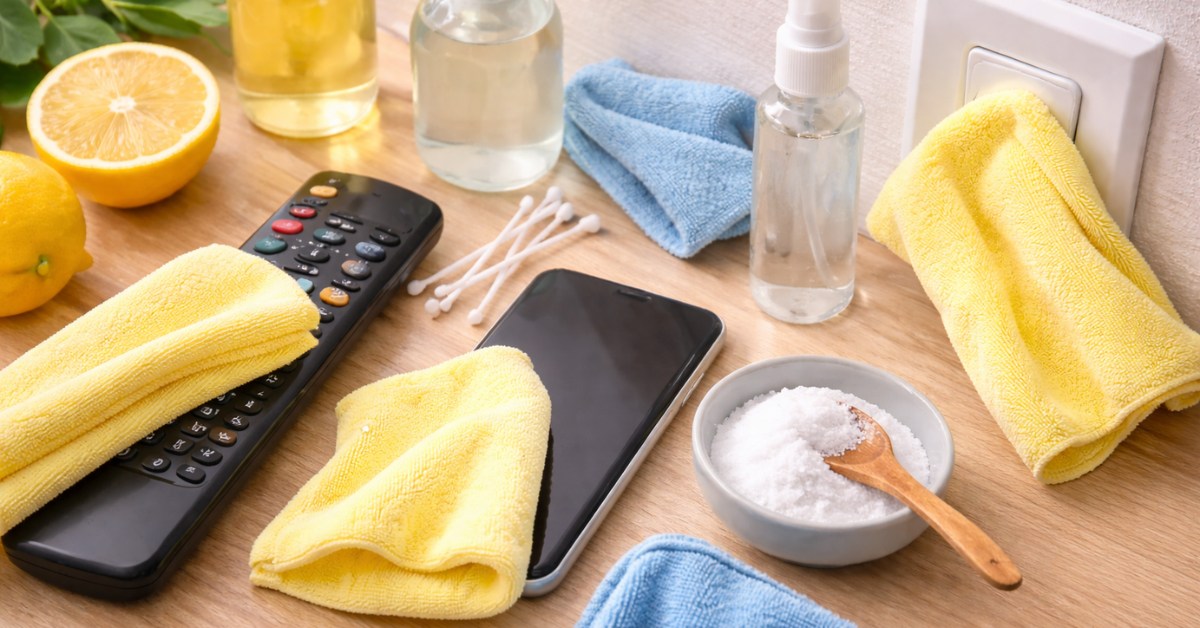
People often focus on cleaning floors, the kitchen, or the bathroom during spring cleaning. Yet some everyday objects we touch dozens of times a day go completely unnoticed. As a result, they become real reservoirs of bacteria.
These everyday objects can harbor more bacteria than you think
The remote control, light switch, phone, or computer keyboard — these surfaces are handled constantly and are rarely cleaned, even though they accumulate dust, microbes, and fingerprint residues. Here are the household items that are among the dirtiest and how to clean them simply, without harsh products.
The remote control, handled by the whole family
The remote control is one of the most touched objects in the home. It passes from hand to hand, sometimes during meals or while relaxing on the couch. Yet it is rarely included in regular cleaning routines.
The gaps between the buttons easily trap crumbs, dust, and bacteria. To clean it, simply use a slightly damp cloth with a touch of white vinegar or household alcohol. A cotton swab can also help reach the spaces between the keys.
The light switches, touched dozens of times a day
Light switches are used constantly in the home, often with wet hands or after cooking. Yet they are rarely cleaned.
A simple microfiber cloth slightly dampened with a mix of water and white vinegar can remove traces and microbes. This quick step can be added to the weekly cleaning routine to keep surfaces clean.
The door handles, a constant passage point
Every door opening involves contact with a handle. In a home, some handles can be touched dozens of times a day.
Yet they are often forgotten during cleaning. A cloth dipped in soapy water or white vinegar is enough to remove smudges and curb bacterial growth. The kitchen and bathroom handles deserve special attention.

The smartphone, a real germ nest
The phone goes with us everywhere: on the commute, at work, sometimes even in the kitchen. Yet we rarely think to clean it.
Studies show that smartphones can harbor more bacteria than some surfaces in the home. Regular cleaning with a lightly alcohol-based wipe or a microfiber cloth helps limit the buildup of germs.
The computer keyboard, often full of dust
The computer keyboard is another highly touched object, especially with remote work. Between the keys, dust and tiny particles can easily accumulate.
A simple flip of the keyboard can already remove a portion of the residue. Then a slightly damp cloth or a cotton swab can be used to clean the keys. Some people also use a can of compressed air to blow out dust.
The faucets and appliance handles
In the kitchen and bathroom, faucets and appliance handles are touched very regularly. Yet they aren’t cleaned as often as the countertops.
These metal surfaces can accumulate smudges, limescale, and bacteria. A cloth dipped in diluted white vinegar is enough to restore their shine while naturally disinfecting them.

The toothbrush holder, often forgotten
In the bathroom, the toothbrush holder can quickly accumulate moisture and bacteria. Yet it is rarely cleaned during cleaning sessions.
A quick rinse with hot water and a little white vinegar cleans it effectively and helps prevent the buildup of deposits.
Reusable grocery bags
Reusable bags accompany many shopping trips, sometimes several times a week. They can carry fruits, vegetables, or packaged products, but they are rarely washed.
A regular run through the washing machine helps prevent the buildup of bacteria and odors.
Why these small gestures really matter
These everyday objects may seem harmless. Yet they are among the most-handled surfaces in the home. Cleaning them regularly helps limit the accumulation of microbes while improving overall household hygiene.
Good news: a few simple steps are enough. You don’t need to resort to harsh chemicals. White vinegar, mild soap, or a simple microfiber cloth can already achieve an effective cleaning result that’s gentler on the environment.
When doing spring cleaning, remembering these small often-forgotten items can make a real difference in keeping a home healthier.
Also read
- Spring cleaning special: tips and tricks
- Practical guide: eco-friendly housekeeping must-haves
- 7 natural recipes for all your home cleaning